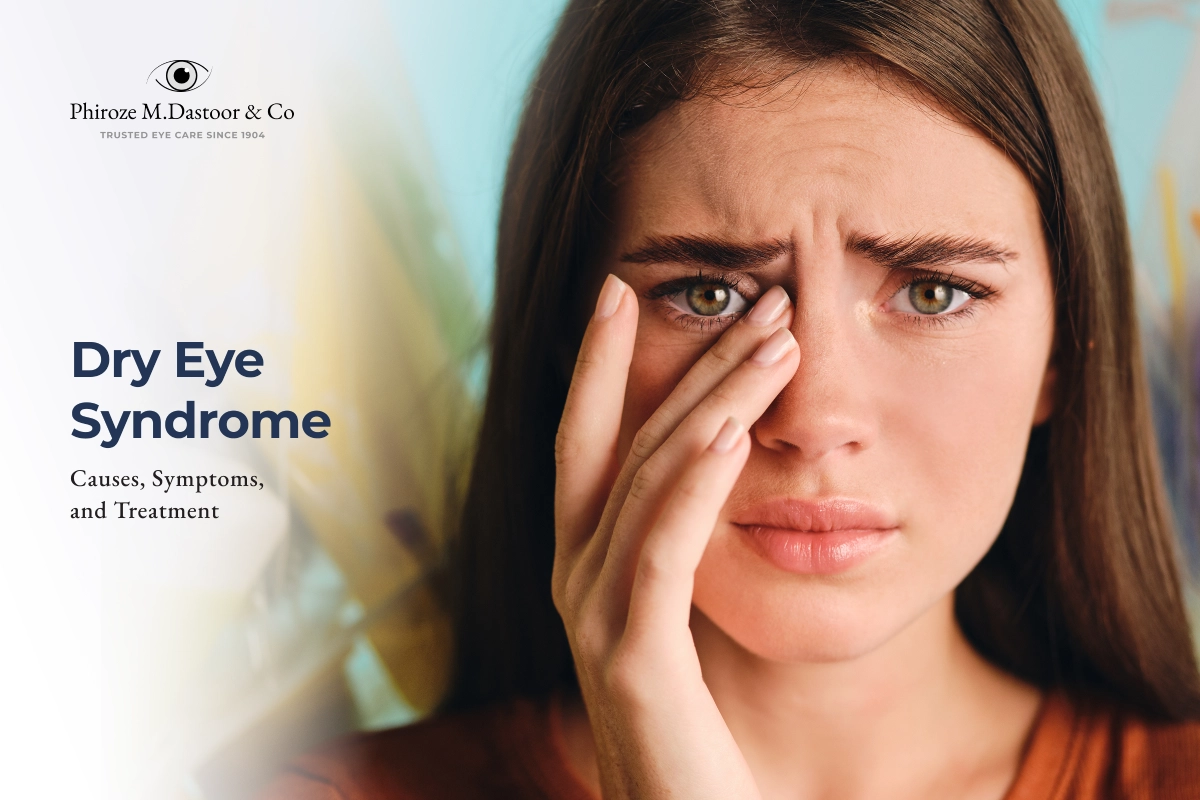
Dry eye syndrome, medically known as dry eye disease (DED) or keratoconjunctivitis sicca, is a condition that affects millions worldwide. This common disorder occurs when the eyes are producing inadequate tears or when tears evaporate too quickly, leading to an unstable tear coating in the eye and inflammation of the ocular surface (outer eye surface).
Understanding Dry Eye Syndrome
Dry Eye Syndrome occurs when the tear film, which protects and lubricates the eye, loses its balance. First, let’s understand the structure of the eye, particularly the tear film. The tear film consists of three key layers:
1. Outer oily layer: Prevents tears from evaporating.
2. Middle watery layer: Provides moisture and nutrients.
3. Inner mucin layer: Helps tears spread evenly across the eye’s surface.
When any of these components become disrupted, the result is an unstable tear film that is not able to protect and nourish the eye’s surface. Cases of dry eye syndrome have been on the rise, especially during and after the COVID era, likely due to the increased use of digital devices in today’s online age.
All content is reviewed by our medical team to ensure reliability but you should always consult a practitioner if you have any eye concerns or vision symptoms.
Primary Causes and Their Risk Factors
Several factors can contribute to dry eye syndrome, ranging from natural changes in the body to certain medical conditions and treatments.
- Tear Deficiency
This category involves insufficient tear production because the lacrimal gland (the gland that produces tears) is not functioning well. This could be due to:
- Age-related changes: Natural decline in tear production, particularly after menopause
- Autoimmune conditions: Including rheumatoid arthritis, lupus, and scleroderma
- Medications: Certain medications used for conditions such as allergies, colds, depression, high blood pressure, and fluid retention can sometimes cause dryness or affect eye health.
- Sjögren’s syndrome: An autoimmune condition where the body’s immune cells attack the tear glands.
- Evaporative Dry Eye
This type is more common. It results from excessive tear evaporation due to poor tear quality. These can be due to multiple reasons:
- Blepharitis: Inflammation of the eyelid margins.
- Environmental factors: like low humidity, more windy conditions, or sitting for long periods near air conditioning (AC), or excessive screen use can also lead to dry eyes.
- Wearing contact lenses can interfere with the natural distribution of tears.
- Incomplete blinking or long staring without enough blinks: Often associated with concentrated tasks like computer work.
- Meibomian gland dysfunction (MGD): Blockage or malfunction of oil-producing glands in the eyelids.
While tear deficiency and evaporation are the two primary causes of dry eye syndrome, other underlying health conditions and external influences can also make symptoms worse or trigger dryness. These are known as systemic and environmental factors.
- Systemic and Environmental Factors
Several broader factors contribute to dry eye development:
- Hormonal changes: Particularly during menopause and pregnancy.
- Nutritional deficiencies: Vitamin A and omega-3 fatty acids deficiency can affect eye health.
- Skin conditions: like rosacea and eczema affecting the eyelid area
- Lifestyle factors: Smoking, excessive alcohol consumption, and poor diet
All these factors can make the eyes more prone to dryness, so it’s important to notice the early symptoms of dry eye and understand how they may appear.
Recognising the Symptoms
Dry eye syndrome presents with a diverse range of symptoms that can significantly impact quality of life:
Primary Symptoms
These are the early and most noticeable signs of dry eye syndrome, the sensations that directly alert you that something is wrong with tear production or eye surface lubrication.
- Dryness sensation: Persistent feeling of insufficient moisture
- Burning or stinging: Sharp, uncomfortable sensations in the eyes
- Gritty or sandy feeling: As if particles are in the eyes
- Inflammation: Visible inflammation, such as redness and irritation of the eye surface
- Blurred vision: Particularly during reading or screen use
- Light sensitivity (known as photophobia): Discomfort in bright conditions
Secondary Symptoms
These are follow-up effects that develop when the condition persists or worsens. They often indicate that the eyes are under prolonged strain or that the surface damage has progressed.
- Eye fatigue: Rapid tiredness during visual tasks
- Difficulty wearing contact lenses: Increased discomfort and intolerance
- Excessive tearing: When the eyes become dry, they start to produce excess tears.
- Mucous discharge: Sticky secretions around the eyes
- Night vision problems: Difficulty with driving in low light
These symptoms may vary in intensity from day to day. Recognising them early allows for timely intervention before dryness causes more serious surface damage.
Diagnosis
To find out if you have dry eye syndrome, you should attend for clinical examination (to assess your eyelids, tear film, and eye surface), along with diagnostic tests (to measure how well your tears are working).
Clinical Examination
During this step, the specialist closely examines your eyelids, conjunctiva, and cornea using special instruments. They also review your lifestyle, medical history, and medications, because factors like screen time, environment, and certain drugs can affect your tear quality.
This helps determine whether your dry eye is caused by low tear production, excessive evaporation, or a mix of both.
Once the cause and severity are known, the next step is to decide on the right treatment approach.
Treatment and Management
Dry eye treatment is not the same for everyone, it depends on how severe your symptoms are and what’s causing them.
Specialists usually follow a step-by-step plan, starting with simple measures and moving toward advanced options if needed.
1. Early Treatment Approach For Mild Dry Eye
If your dry eye symptoms are mild, the first goal is to keep your eyes moist, reduce irritation, and improve the quality of your natural tears.
This can usually be managed with lubricating eye drops and some everyday lifestyle changes.
a. Lubricating Eye Drops (Artificial Tears)
These drops act as substitutes for natural tears, offering quick relief and protection. Frequent use of preserved eye drops may cause irritation.
b. Lifestyle Modifications for Effective Dry Eye Management
Along with prescribed treatments, adopting a few healthy habits can significantly reduce dryness and discomfort. You can remember them with the simple acronym F.R.E.S.H., which stands for:
- F – Fluids:
Stay hydrated by drinking enough water each day to maintain healthy tear production. - R – Rest your eyes:
Follow the 20-20-20 rule – every 20 minutes, look at something 20 feet away for 20 seconds to reduce digital eye strain. - E – Environment:
Keep your surroundings eye-friendly. Use a humidifier, avoid sitting directly under air conditioners or fans, and protect your eyes in windy or dry settings. - S – Smart nutrition:
Eat foods rich in omega-3 fatty acids and antioxidants to support tear quality and reduce inflammation. - H – Healthy habits:
Avoid smoking, limit alcohol, and get sufficient sleep, all of which promote better eye lubrication and comfort.
If your eyes still feel uncomfortable even after these changes, your doctor may move to the next level of treatment.
2. Further Treatment Options: For Moderate Dry Eye
When basic remedies aren’t enough, your ophthalmologist may prescribe medications that target inflammation or improve tear gland function.
These treatments are more focused and aim to restore the eye’s natural balance.
a. Anti-Inflammatory Medications
Chronic dryness often causes irritation and swelling on the eye surface. These medicines help calm that inflammation.
b. Oil Gland Treatments (For Meibomian Gland Dysfunction)
In some cases, dry eye occurs due to blocked oil glands in the eyelids rather than a lack of tears. When these glands don’t function properly, tears can evaporate too quickly, leading to dryness and irritation. If symptoms persist after initial treatment, the doctor may recommend more advanced therapy options.
3. Advanced Treatments: For Severe or Chronic Dry Eye
For people whose symptoms persist despite medication or lifestyle changes, advanced therapies can provide longer-lasting relief.
a. Punctal Plugs
Tiny plugs are placed in the tear drainage ducts to help retain tears longer on the eye surface.
They can be temporary (dissolvable) or permanent, depending on your needs.
b. Newer Pharmaceutical Innovations
Recent advancements have introduced targeted medications that stimulate natural tear production, reduce tear evaporation, and control inflammation to improve long-term eye comfort and surface protection.
4. New and Emerging Therapies
Research in eye care is constantly advancing.
New approaches aim to enhance healing and offer more personalized care, including:
- Eye drops developed from natural components that support tissue repair.
- Advanced anti-inflammatory treatments designed to relieve redness and burning.
- Regenerative therapies being explored to restore or rebuild tear glands.
- AI-assisted care that helps tailor treatment plans to each patient’s specific needs.
Potential Complications
Untreated or poorly managed dry eye can lead to further problems, such as:
- Corneal damage: Ulcers or scarring that blur vision.
- Eye infections: Because tears protect against germs.
- Persistent vision issues: Making reading or driving difficult.
The good news? With early care, most of these complications can be prevented.
Final Words
Dry Eye Syndrome is a common yet often overlooked condition that affects vision clarity, comfort, and overall eye health. It occurs when the eyes don’t produce enough quality tears or when tears evaporate too quickly, leading to irritation and inflammation. Factors such as age, hormonal changes, medications, autoimmune conditions, screen use, and environmental stressors can all play a role.
With the right diagnosis and tailored treatment, most people can achieve lasting relief and prevent long-term damage. Early attention and regular eye checkups are key to maintaining healthy, comfortable vision.
At Phiroze Dastoor, the focus remains on precision eye care that combines experience with modern innovation, helping every patient see clearly and live comfortably.
References:
- Talens-Estarelles, C., Cerviño, A., García-Lázaro, S., Fogelton, A., Sheppard, A., & Wolffsohn, J. S. (2023). The effects of breaks on digital eye strain, dry eye and binocular vision: Testing the 20-20-20 rule. Contact lens & anterior eye : the journal of the British Contact Lens Association, 46(2), 101744. https://doi.org/10.1016/j.clae.2022.101744
- Craig, J. P., Nichols, K. K., Akpek, E. K., Caffery, B., Dua, H. S., Joo, C. K., Liu, Z., Nelson, J. D., Nichols, J. J., Tsubota, K., & Stapleton, F. (2017). TFOS DEWS II definition and classification report. The Ocular Surface, 15(3), 276–283. https://doi.org/10.1016/j.jtos.2017.05.008
- Maurya, R. P., & Gupta, S. (2023). Digital eye strain: An emerging ocular morbidity. Indian Journal of Clinical and Experimental Ophthalmology, 9(2), 128–129. https://doi.org/10.18231/j.ijceo.2023.025
- Messmer, E. M. (2015). The pathophysiology, diagnosis, and treatment of dry eye disease. Dtsch Arztebl International, 112(5), 71–82. https://doi.org/10.3238/arztebl.2015.0071
- National Institutes of Health, Office of Dietary Supplements. (2022, July 18). Omega-3 fatty acids – consumer fact sheet. U.S. Department of Health and Human Services. https://ods.od.nih.gov/factsheets/Omega3FattyAcids-Consumer/
Frequently Asked Questions (FAQs)
Dry eyes can’t usually be fully cured, but it can be managed effectively for long-term comfort.
Treatment depends on the cause, ranging from artificial tears for mild cases to advanced therapies such as IPL therapy, punctal plugs, or LipiFlow® for more severe dryness. For the right diagnosis and personalised care, you can consult the Phiroze Dastoor team, where expert eye specialists offer advanced solutions for lasting relief.
Short relief may mean blocked oil glands or inflammation, which need targeted treatments, not just regular drops.
Yes, spending long hours on screens can cause dry eyes because reduced blinking leads to faster tear evaporation.
Consult an eye specialist with the Phiroze Dastoor team, offering advanced tests and personalised care.