Many people wish to experience clear vision without depending on glasses or contact lenses. LASIK surgery offers a well-established method to correct common vision problems and reduce this dependence. Before choosing LASIK, it is important to understand how the procedure works, who it is suitable for, and what to expect during the recovery period.
What Is LASIK Eye Surgery?
LASIK (Laser-Assisted In Situ Keratomileusis) is an advanced laser vision correction procedure that helps people see clearly without relying on glasses or contact lenses. The surgery reshapes the cornea, the transparent front layer of the eye, so that light falls properly on the retina, resulting in sharper vision. Research studies have shown that it offers highly predictable results, quick recovery, and lasting visual improvement for people with nearsightedness, farsightedness, or astigmatism.
All content is reviewed by our medical team to ensure reliability but you should always consult a practitioner if you have any eye concerns or vision symptoms.
Patient Satisfaction After LASIK Eye Surgery
LASIK eye surgery is one of the most commonly performed vision correction procedures worldwide. Research consistently shows that 82% of patients are satisfied with their vision after LASIK.
But what does “satisfaction” really mean in this context? It goes far beyond simply reading an eye chart more clearly. Many patients describe the benefits of LASIK in terms of everyday comfort and convenience:
- Morning freedom: being able to wake up and see the alarm clock clearly without reaching for glasses.
- Active lifestyle: enjoying sports, gym workouts, or swimming without worrying about glasses slipping or contact lenses causing discomfort.
- Travel ease: no longer needing to carry extra lenses, solutions, or back-up spectacles.
- Work comfort: reduced strain from contact lens wear during long hours at a desk or in front of screens.
Quality of Life Improvements After LASIK Eye Surgery
For most people, the changes after LASIK are more about lifestyle than just medical improvement. Patients often report feeling more confident and less restricted in daily activities.
However, LASIK does not stop the natural changes that occur in vision over time. Some individuals may need glasses later in life for certain tasks, such as reading fine print or driving at night, as part of normal age-related vision changes.
Is LASIK Eye Surgery Safe in the Long Run?
Safety is a common concern for anyone considering vision correction. Thankfully, large-scale studies and decades of clinical experience show that LASIK eye surgery is generally safe when performed on suitable candidates by an experienced ophthalmologist. Complications are rare, and most side effects, such as temporary dryness or mild light sensitivity, resolve within weeks to months.
What matters most is undergoing a comprehensive pre-surgery assessment, where your ophthalmologist carefully checks the health and shape of your eyes. This ensures that only those with the right eye conditions proceed with LASIK, which is why patient satisfaction rates remain high.
Understanding Refractive Errors
Before knowing about LASIK Eye Surgery, it is helpful to grasp why vision can be blurry:
- Myopia (nearsightedness):
Distant objects appear blurry because the eyeball is slightly longer than normal or the cornea is too curved. This causes light rays to focus in front of the retina instead of directly on it. - Hyperopia (farsightedness):
Nearby objects appear blurry because the eyeball is shorter than normal or the cornea is too flat. This causes light rays to focus behind the retina. - Astigmatism:
Vision is blurred at all distances because the cornea or lens has an irregular shape. Instead of being evenly curved, it has mismatched curvatures, causing light to scatter or focus unevenly on the retina.
Spectacles and contact lenses correct vision by adjusting how light focuses on the retina. LASIK, instead of using lenses, permanently reshapes the cornea so that light focuses correctly, improving vision without external aids.
Eligibility and Safety Considerations for LASIK
Appropriate patient selection is important for LASIK safety and success. You may be suitable only if:
- You are aged 18 years or older, with a stable eye and health profile.
- If the cornea is too thin or weak, as in conditions like keratoconus (where the cornea bulges outward and becomes cone-shaped), LASIK is not safe in such cases. Other surface and stabilising procedures may be required.
- LASIK is not recommended if you currently have specific eye problems, like uncontrolled glaucoma (high pressure damaging the optic nerve) or severe dry eyes. These conditions need to be managed first.
- Diseases like diabetes or specific immune system problems are under control or managed well, as if not they can affect the healing process. Your surgeon will guide you through preparing for this.
Before LASIK, your Consultant will carry out a detailed examination and treatment planning using advanced scans and tests. These measure the shape, thickness and overall health of your cornea to ensure that LASIK is safe for you.
The LASIK Procedure: Step by Step
Understanding what happens during LASIK helps ease any concerns and prepares you for what to expect before, during, and after the surgery.
1. Before the Surgery
Your ophthalmologist will first do a complete eye examination to see if LASIK is right for you. This usually includes:
- Scanning the cornea (the clear front part of the eye) to look at its shape.
- Measuring the thickness of the cornea to make sure it is strong enough for the procedure.
- Checking how your eye focuses light so that the treatment can be personalised to your vision.
These tests make sure LASIK will be both safe and effective for your eyes.
2. On the Day of Surgery
- Only numbing eye drops are used. You stay awake, but you will not feel pain.
- A laser makes a skinny flap on the surface of the cornea.
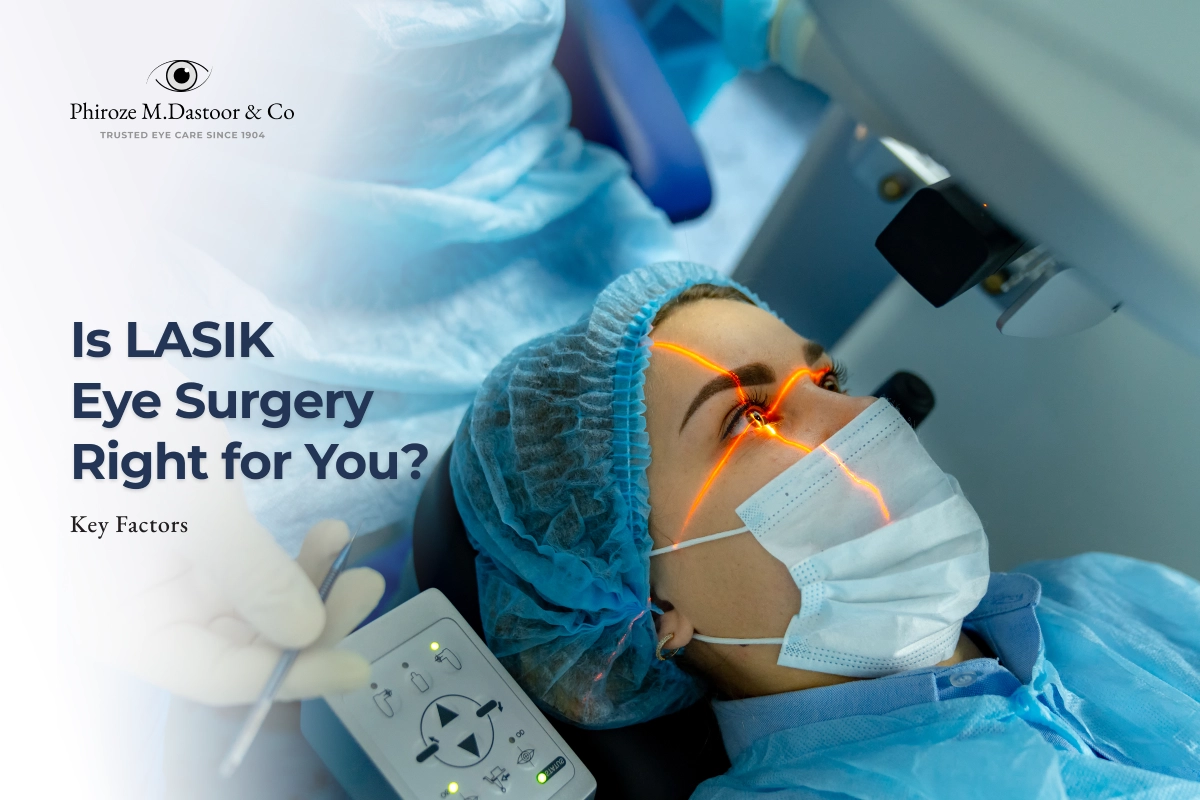
- Another laser then reshapes the cornea underneath. This corrects how light enters your eye and sharpens your vision.
- The flap is gently put back into place. It naturally sticks down and heals without stitches.
3. After the Surgery
- A small shield may be placed over your eye to protect it for a few hours.
- You will be given eye drops to keep the eyes comfortable and help with healing.
- Most people can go home the same day, usually within an hour or two.
Before that, let us understand the recovery timeline, which can help you decide whether LASIK fits your lifestyle and work commitments.
Recovery After LASIK Eye Surgery
When deciding if LASIK is right for you, it helps to understand what recovery looks like. Healing is usually quick, but it does require care and patience.
Typical Recovery Timeline
- Day 1: Most patients notice clearer vision right away, though eyes may feel slightly scratchy or sensitive to light.
- Days 2-3: Many can return to desk work or light daily activities. Short periods of screen use are usually manageable, but breaks are important to reduce risk of fatigue.
- Week 1: Most regular routines can be resumed. However, avoid swimming, eye makeup, and close exposure to smoke or heat sources until your doctor confirms recovery progress.
- Weeks 2-4: Light sports are possible with eye protection, vision gradually stabilises.
- 3-6 months: The eyes fully heal, and your ophthalmologist confirms stable results.
Benefits and Risks to Consider
When asking “Is LASIK eye surgery safe for me?” It is important to weigh both sides.
Benefits
- Quick visual recovery: Many people see well within 24-48 hours.
- High satisfaction: Studies report 82% patient satisfaction.
Risks (though uncommon)
- Dry eyes or glare in dim light, although in most cases temporary
- A slight chance of needing a second procedure or further intervention..
- Infrequent healing complications, such as infection, avoidable with good compliance
Key Takeaway
LASIK eye surgery offers a safe and effective way to achieve clearer vision and reduce dependence on glasses or contact lenses. Most patients experience quick recovery and lasting visual stability, along with improved comfort and confidence in daily life.
However, not everyone is a suitable candidate. A detailed pre-surgery evaluation is essential to ensure safety and identify alternatives if needed. While LASIK delivers long-term benefits, it does not prevent natural age-related vision changes.
At Phiroze Dastoor, every patient receives thorough assessment and personalized guidance to ensure the chosen vision correction option aligns with their eye health and lifestyle needs.
Frequently Asked Questions (FAQs)
You may be suitable if you’re over 18, have stable vision for at least a year, and have healthy, adequately thick corneas.
Most people notice clearer vision within a day or two and return to daily activities within a few days.
No, the procedure is painless as numbing drops are used. You may feel mild discomfort or dryness for a short time afterward.
Many people return to desk work within one to two days, depending on comfort and the nature of their job.
Alternatives such as PRK can safely correct vision for people with thinner corneas or specific eye conditions when LASIK isn’t suitable.